
Choosing between a bareboat and a skippered charter often feels like a question of experience.
Do you have enough confidence? Can you handle the yacht? Will conditions be manageable?
In reality, the difference has less to do with skill and more to do with responsibility — and how that responsibility shapes the week once you’re onboard.
It affects who makes decisions, how pressure builds within the group, and how present people feel during the trip.
How bareboat and skippered charter differ once the week starts
A bareboat charter places full responsibility on one person from the group. That individual becomes legally and practically accountable for navigation, docking, safety, and daily decisions. Even with a capable crew, the skipper remains the final decision-maker.
In the early days of a bareboat charter, this responsibility is often felt most strongly. Departure, the first marina arrival, and unfamiliar manoeuvres demand focus. For experienced sailors, this engagement can be rewarding. For others, it quietly pulls attention away from relaxation.
As the week progresses, routines develop. Short distances and familiar conditions ease the load, but the underlying responsibility never fully disappears. Weather changes, crowded ports, and time constraints still require active management.
A skippered charter shifts this responsibility entirely. A professional skipper handles navigation, manoeuvring, and safety, allowing guests to participate or disengage as they wish.
Importantly, this doesn’t mean surrendering control of the holiday. Routes, stops, and pace are discussed collectively; the execution happens quietly in the background.
In Croatia, where distances are short and plans often evolve day by day, the skipper’s role is less about pushing limits and more about smoothing transitions.
The moment it usually becomes clear
It often doesn’t become obvious on day one.
The first departure goes well, the weather is stable, and everything feels manageable.
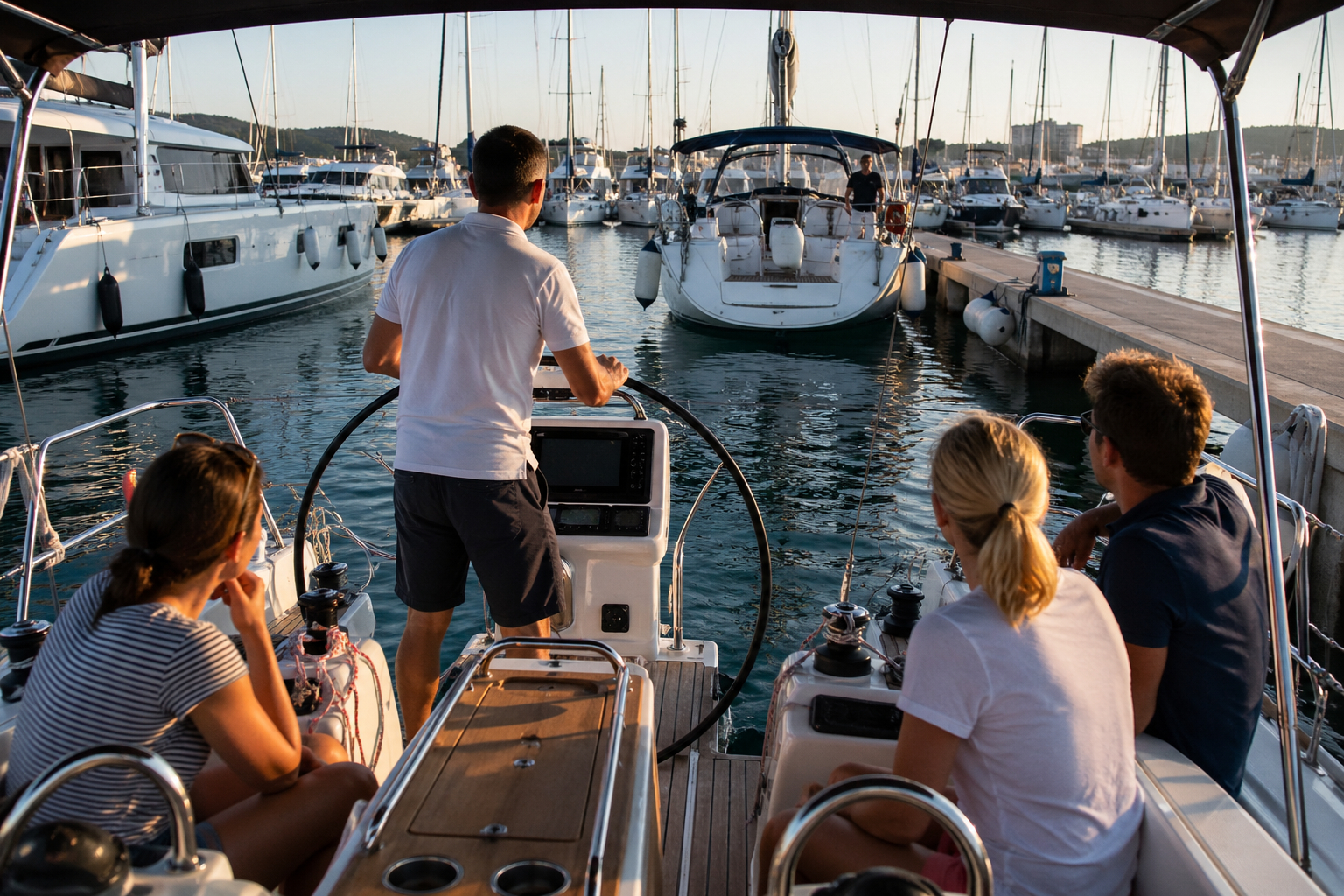
Then comes a crowded marina, a tighter manoeuvre, or a small change in conditions — and the dynamic shifts slightly.
The skipper becomes more focused. The group becomes quieter. Decisions take a bit longer.
Nothing is going wrong, but the responsibility becomes visible.
And that’s usually the moment where people realise what they actually chose.
Responsibility, pressure, and group dynamics
The emotional impact of responsibility is often underestimated.
On bareboat charters, the designated skipper frequently becomes the default problem-solver. Even minor decisions — when to move, where to anchor, whether to wait out a change in weather — accumulate. For some, this leadership role enhances the experience. For others, it creates subtle tension, especially if expectations within the group differ.
Skippered charters distribute this pressure differently. Decision-making becomes collaborative rather than hierarchical. Guests often report feeling more present, more patient, and more willing to adapt plans spontaneously.
This difference becomes most noticeable by midweek.
Energy levels drop slightly, and mental fatigue sets in. On bareboat charters, this can surface as indecision or irritability. On skippered charters, it often goes unnoticed.
Group composition matters here. Mixed-experience crews, families, and groups with varying confidence levels tend to benefit disproportionately from having a skipper onboard.
Legal responsibility versus lived reality
Another area of confusion is legal responsibility.
In a bareboat charter, the skipper must hold the appropriate licence and is legally responsible for the vessel. This responsibility exists regardless of how calm conditions are or how short the distances feel.
With a skipper onboard, that legal responsibility shifts away from the guests. This change doesn’t just affect paperwork — it changes how people feel onboard. Knowing that someone else carries ultimate accountability allows guests to relax into the experience more fully.
It’s worth noting that many guests who technically qualify for bareboat still choose a skipper. This is not a compromise; it’s a strategic decision about how they want the week to feel.
Who often changes their mind — and why
One of the most common patterns seen in charter is guests who initially plan to sail bareboat but later request a skipper.
This often happens with:
-first-time charter guests who overestimate how relaxing bareboat will feel
-experienced sailors travelling with non-sailing friends or family
-mixed groups where responsibility quietly falls on one person
Conversely, guests who choose a skipper from the start rarely regret it. Even those who enjoy sailing often appreciate being able to step in and out of involvement without carrying full responsibility.
Recognising this pattern early helps avoid last-minute changes and ensures expectations align with reality.

Related charter options in Croatia
Both bareboat and skippered charter options work particularly well along the Croatian coast.
Exploring Yacht Charter in Croatia provides an overview of available charter formats and yacht types. The Šibenik Area is especially suited to comparing these options in practice, offering calm waters, short distances, and supportive infrastructure. Departures from Marina Mandalina allow crews to experience the practical differences between bareboat and skippered setups without added complexity.
If you’re unsure which option best fits your crew, contact us for a clear, experience-based recommendation.