

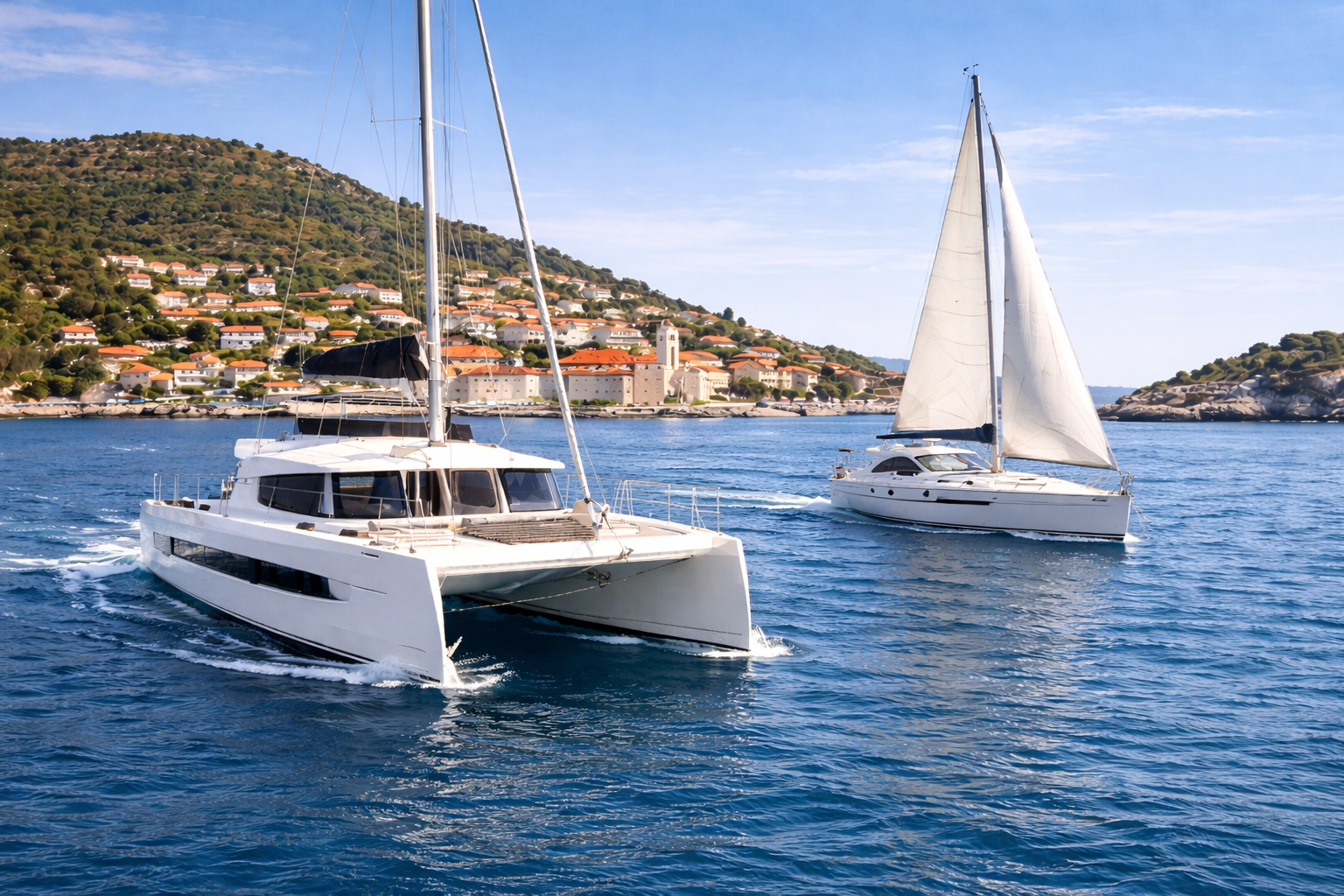
Choosing between a sailing boat and a catamaran rarely feels like a defining decision at the start.
You’re comparing layouts, looking at photos, noticing differences in space and stability, and the choice seems relatively straightforward. Sailing boats feel more traditional and engaging. Catamarans feel more spacious and settled.
What’s easy to miss is how much that choice shapes the rhythm of the week — how mornings begin, how time is shared onboard, how nights feel at anchor, and how the group feels by the middle of the week.
In Croatia, both options work exceptionally well. That’s what makes the decision less about what works, and more about what you want the week to feel like.
And that difference usually doesn’t appear all at once.
What the difference actually feels like once the week begins
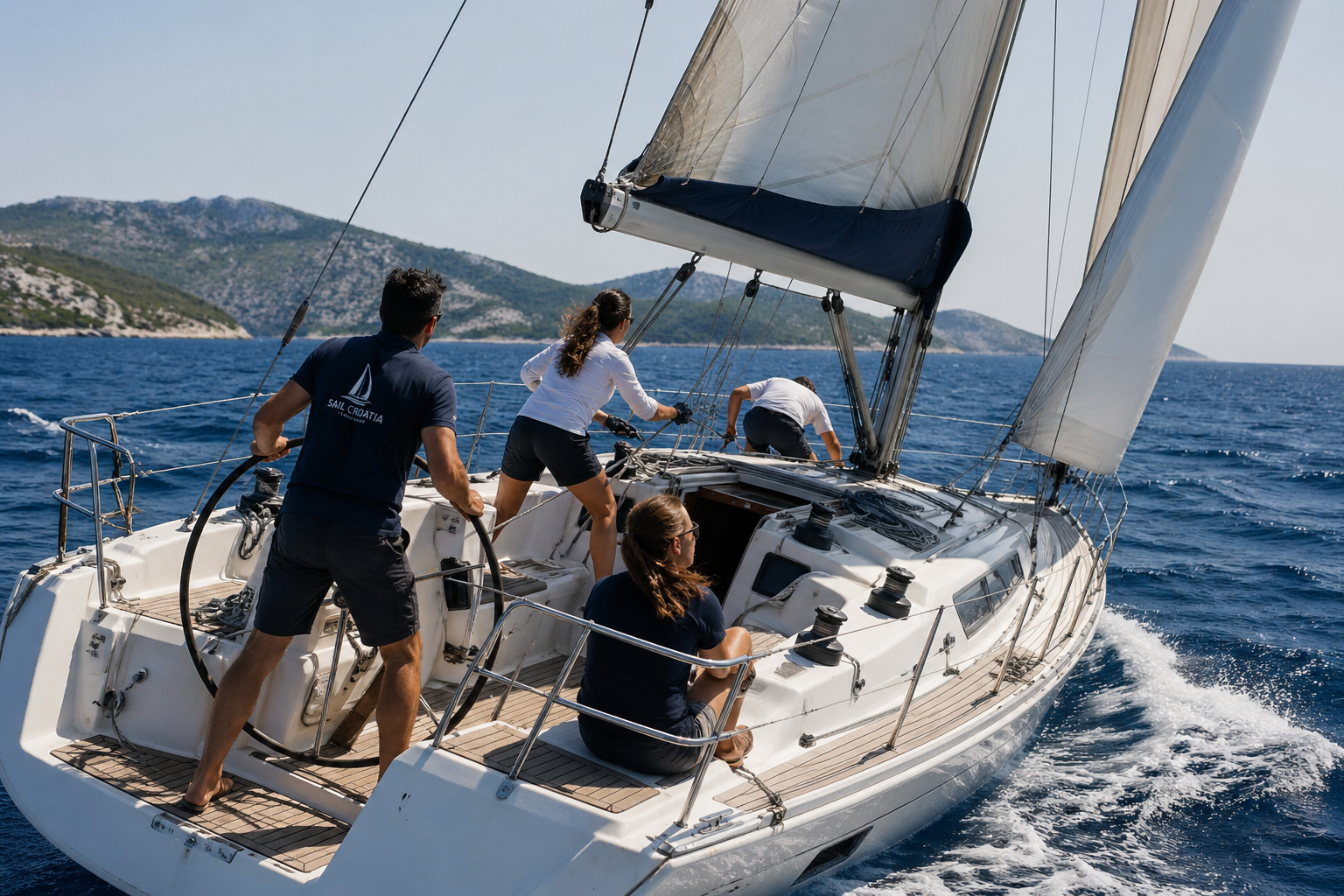
A sailing boat invites participation. Movement under sail is noticeable, and progress feels earned. The helm is responsive, and even short distances create a sense of journey. Space onboard is efficient rather than expansive, which naturally draws the crew together.
In practice, this creates a shared rhythm. Sails go up, roles emerge organically, and sailing becomes part of the day rather than something happening in the background. Many guests enjoy this engagement, even if they are not actively trimming sails themselves. The boat feels alive, and that feeling carries through the week.
It usually becomes clear in small moments. A slightly stronger wind where one boat leans into it while the other stays almost flat. A longer stretch between islands where movement is either part of the experience or something that fades into the background.
A catamaran starts from a different place. Stability is immediate. With two hulls and a wide beam, movement is minimal both underway and at anchor. Space is distributed horizontally, allowing guests to spread out without losing connection.
This changes the tone of the week. Days settle more quickly. Conversations continue uninterrupted while underway. Meals, rest, and swimming become the focus, rather than the act of moving between places. The boat starts to feel more like a floating base than a vehicle.
Neither approach is better. They simply prioritise different experiences.
How the choice shapes life onboard over time
The difference becomes more noticeable as the days pass.
On a sailing boat, nights at anchor reinforce the sense of being at sea. There’s always a slight movement, and the sounds of the water carry differently. For many guests, this becomes part of the experience rather than something to adjust to. Sleep feels deeper, and mornings tend to start with a sense of purpose. By midweek, the day often takes shape around the sailing itself.
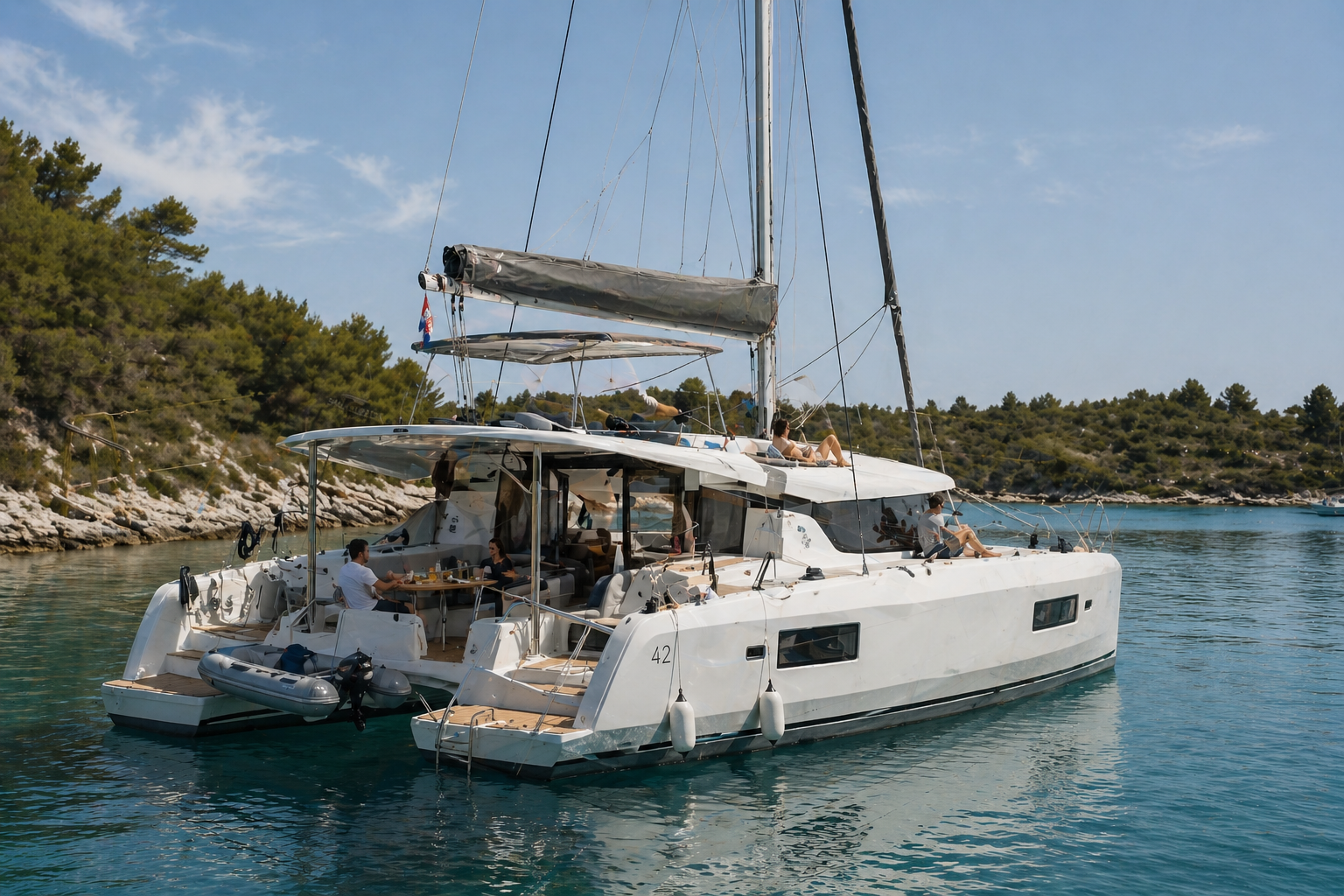
On a catamaran, the feeling is different from the start. Nights are notably still, and the boat remains almost flat even when conditions change slightly. For guests sensitive to movement, or travelling with children, this stability can make a significant difference. Mornings feel slower, less structured, and the sense of “being settled” develops quickly.
Marina stays bring out another layer. Sailing boats are narrower and generally easier to handle in tighter spaces, especially in busy ports. Catamarans require more room and often come with higher berthing costs, but once docked, they offer more space to relax.
By day four or five, most crews begin to feel the cumulative effect of their choice. On sailing boats, the week often feels more connected to the journey itself. On catamarans, it tends to feel more settled and physically comfortable.
How space and movement shape the group dynamic
Group dynamics tend to follow the layout of the boat.
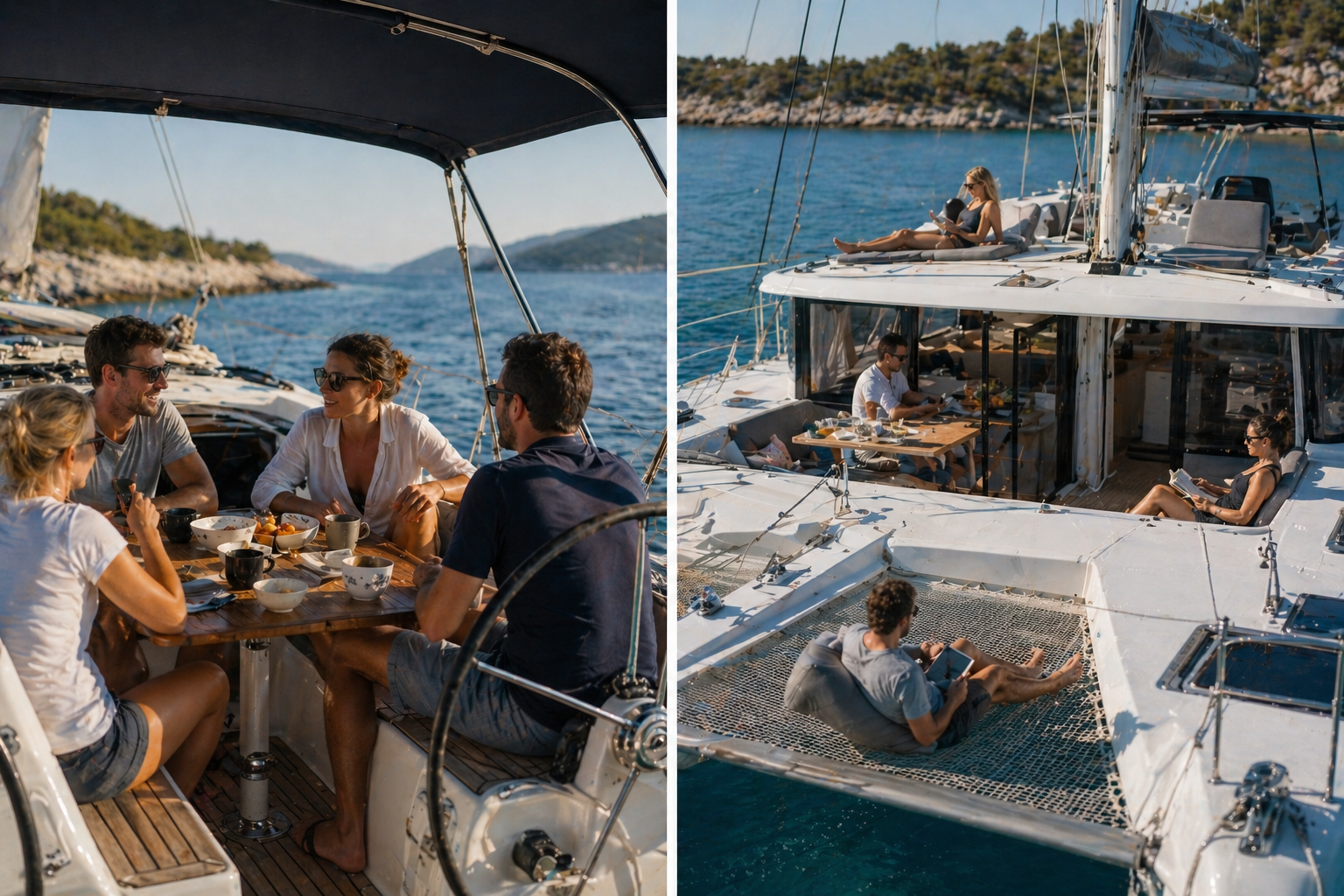
On a sailing boat, space is shared more closely. The cockpit, saloon, and deck naturally bring people together, and interaction happens almost without effort. For crews that enjoy doing things together, this often becomes part of the appeal. Decisions feel shared, and the day unfolds collectively.
A catamaran allows for a different balance. With separate hulls and more distributed living areas, it’s easier for people to step away without disconnecting completely. Some might be reading at the front, others resting inside, while a few stay in the cockpit. The group remains together, but not constantly in the same space.
This becomes especially relevant in mixed groups, where expectations and energy levels vary. Families, multi-generational crews, and groups with different routines often find this flexibility makes the week feel smoother.
What matters less is the number of people onboard, and more how the group prefers to spend time.
Smaller crews often choose catamarans for the same reasons larger ones do — stability, comfort, and the ability to move at their own pace.
Assumptions that don’t always hold up in practice
Some of the most common assumptions don’t fully hold up once you’re onboard.
Catamarans are often seen as less connected to sailing. In reality, they still move under sail — the difference is in how that movement is felt. It’s calmer, less physical, and more in the background.
Sailing boats are sometimes assumed to be less comfortable. While the space is more compact, comfort tends to come from how the boat is used rather than how much room it offers. Many guests find that the closer layout actually adds to the experience rather than limiting it.
The most common mistake is choosing based on size or price alone. Those factors matter, but they don’t define how the week unfolds.
A more useful way to think about it is simpler:
Do you want the boat to be part of the activity, or the backdrop to it?
Related charter options in Croatia
Croatia’s coastline supports both sailing boats and catamarans exceptionally well.
Exploring Yacht Charter in Croatia provides a broad overview of how different yacht types fit various travel styles. The Split Area is particularly well suited to comparing these options in real conditions, with short distances and a mix of open water and protected bays. Departures from ACI Marina Split allow crews to experience the practical differences between sailing boats and catamarans within the first days of a charter.
If you’re unsure which one fits your week better, this is usually something we go through early, once the route and crew are clear.