


For many people, yacht charter sounds straightforward until the topic of price comes up.
You see a weekly rate, compare a few boats, and then start wondering what’s missing.
Are there hidden costs? Why does the final number often look different from the base price? And why do two yachts of similar size sometimes sit in completely different price ranges?
In Croatia, yacht charter pricing isn’t designed to be confusing - but it is layered.
And most misunderstandings don’t come from the numbers themselves, but from focusing on the base price instead of the full structure of the week.
Once you see how those layers work together, the pricing becomes far more predictable.
Where people usually misread the price
Most people don’t miscalculate yacht charter costs because prices are unclear, but because they’re comparing the wrong things.
Looking only at the base price creates a false sense of difference between yachts, while the actual variation often comes from how the week is used - how far you travel, whether you use a skipper, how often you stay in marinas, and how much flexibility you want during the trip.
Once those factors are understood, the numbers stop feeling unpredictable.
How yacht charter pricing actually works
At its core, yacht charter pricing is built around a base charter fee. This is the amount you see first, and it covers the use of the yacht for the agreed period, usually one week.
What that base price includes is fairly consistent:
-the yacht itself
-standard onboard equipment
-insurance
-marina berth in the home port
What it does not include is what actually happens during the week. That’s where most misunderstandings begin.

Different yacht types naturally come with different cost structures. Sailing yachts tend to have lower base prices and relatively modest operating costs. Catamarans are priced higher due to space, demand, and marina requirements linked to their wider beam.
Motor yachts, luxury yachts, gulets, and mini cruisers operate on a different logic altogether. Crew, fuel consumption, and onboard services become central to the overall cost. Smaller motorboats and RIBs, often chartered for day use or as tenders, follow a simpler structure but are still influenced by fuel and usage patterns.
Seasonality also plays a role. Croatia has a clearly defined charter season, and demand peaks during summer months. Prices rise not because services change, but because availability tightens. The same yacht in May and August can feel identical onboard, yet sit in very different price brackets.
Another important detail is that yachts are not interchangeable products. Age, maintenance level, layout, crew quality, and ownership model all influence pricing. Two yachts that look similar online may deliver very different onboard experiences — and their pricing often reflects differences guests only notice once the week is underway. Two yachts that look similar online can feel very different once the week actually begins.
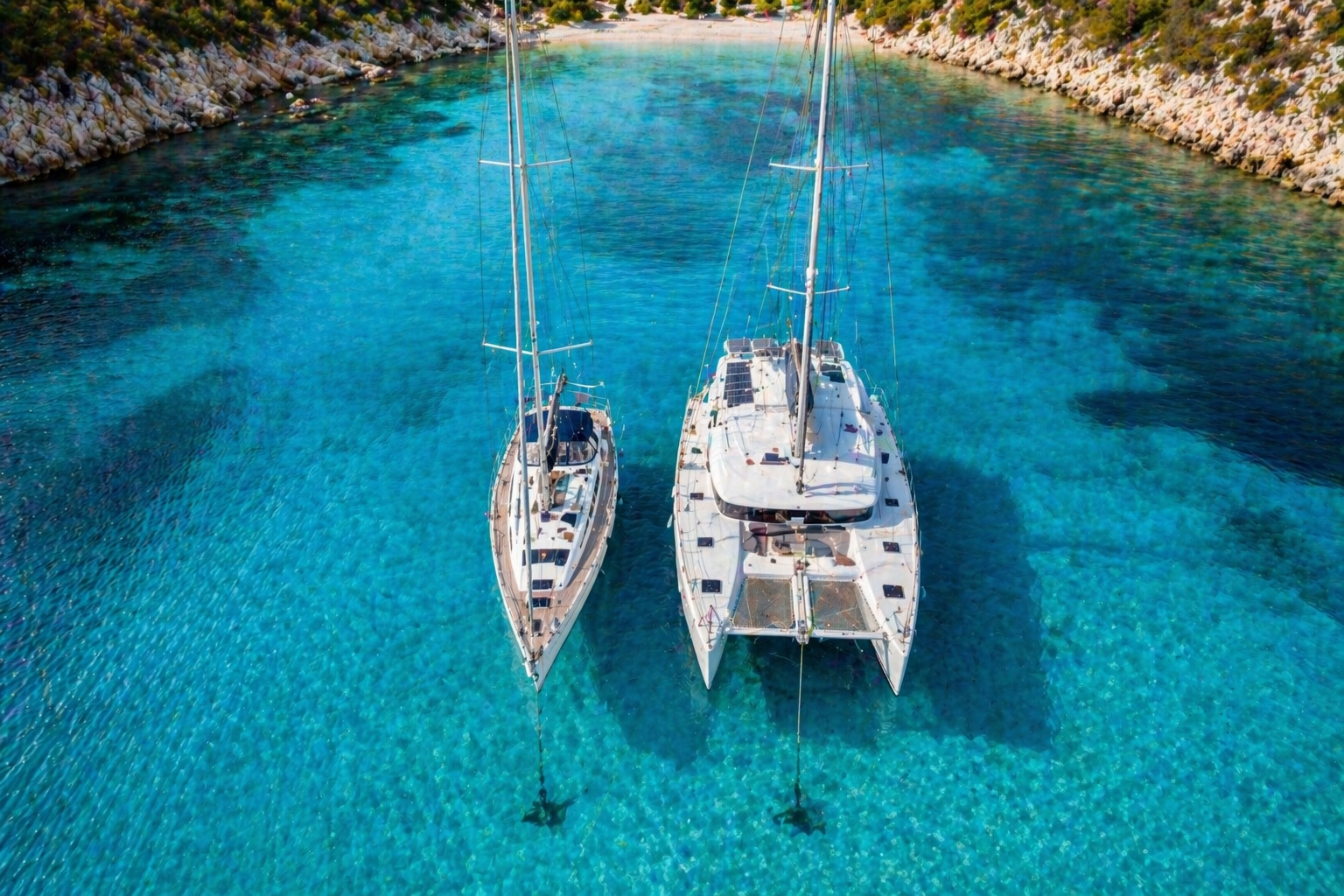
Real cost scenarios from practice
To make this clearer, it helps to look at realistic charter scenarios rather than abstract price lists.
A typical one-week sailing yacht charter for four to six guests usually includes the yacht and standard equipment. Additional costs often come from marina fees outside the base port, fuel used during the week, local tourist taxes, and optional services such as a skipper or hostess. Many guests are surprised by how modest these extras usually are, especially when daily sailing distances are short.
A catamaran charter, often chosen by families or mixed crews, follows the same logic but at a different scale. The base price is higher, and marina fees can increase due to the wider beam. However, fuel consumption remains relatively low if cruising distances are reasonable. Guests often expect daily expenses to rise sharply, only to discover that operating costs remain manageable.
With motor yachts and luxury yachts, costs behave differently. Fuel consumption becomes more visible, and crew services are typically included as part of the experience. Short cruising days and thoughtful route planning can keep variable costs under control, while longer distances increase them quickly.
On many crewed motor yachts, gulets, and mini cruisers, variable expenses are handled through an Advanced Provisioning Allowance (A.P.A.). A.P.A. is a pre-paid fund used to cover operational costs during the charter, such as fuel, marina fees, food, and onboard services. Rather than adding uncertainty, it creates transparency by clearly separating fixed charter fees from running expenses and showing how costs are allocated throughout the week.
Across all yacht types, most budget miscalculations come from focusing only on the headline number instead of the full picture of how the week unfolds.

Common mistakes and practical recommendations
One of the most common mistakes is comparing yachts solely by their base price. Without considering operating costs, crew structure, or usage style, those comparisons rarely reflect the real difference in total spend.
Another frequent issue is leaving additional services until the last moment. Skippers, hostesses, provisioning, transfers, or support boats are often added late, which makes costs feel sudden rather than planned.
Some guests also overestimate daily expenses. In practice, many charter weeks in Croatia are shaped by short sails, swimming stops, and relaxed evenings. When distances remain reasonable, fuel and marina costs stay predictable.
A more reliable way to think about charter costs is to plan around the experience you want, not just the numbers.
Decide how much responsibility you want onboard, how far you plan to travel, and how much flexibility matters to your group. Once those decisions are clear, the budget usually aligns naturally.
Clear expectations upfront almost always lead to a calmer week — both financially and emotionally.

Related charter options in Croatia
Understanding how yacht charter costs are structured makes it easier to choose the right setup from the start.
Browsing Yacht Charter in Croatia provides a broad overview of sailing yachts, catamarans, motor yachts, luxury yachts, gulets, mini cruisers, and RIB options available along the coast. The Split Area is a popular starting point for balanced planning, as short distances and a wide range of marinas help keep daily expenses predictable. Departures from ACI Marina Split give direct access to island routes where flexibility and thoughtful cruising naturally support cost control.
If you already have an idea of your dates and yacht type, we can walk you through a realistic cost breakdown so everything feels clear before you arrive.
Practical questions people usually have
What is included in a yacht charter price in Croatia?
The base price usually includes the yacht, standard equipment, insurance, and the marina berth in the home port. Other costs depend on how the week is spent.
How much extra should you budget for a yacht charter?
It depends on yacht type and usage, but most additional costs come from fuel, marinas, and optional crew or services.
Why do similar yachts have different prices?
Age, maintenance, layout, and ownership all affect the onboard experience, which is often reflected in pricing.